The True Cost of Digital Disruptions (And Why They Are So Cheap to Launch)
· Rafael Cortes · 3 min read
Automated digital disruptions are cheaper and more common than most business owners think, but a few practical steps can protect your operations.
The Commodity of Digital Disruption
Many small and medium business owners assume digital attacks and network disruptions only happen to larger companies. It is easy to think, "Why would a hacker target my local business when there are major corporations down the road?"
The reality is that modern digital disruptions are rarely personal. Today, a significant portion of online attacks are cheap, automated, and entirely opportunistic. Malicious actors do not need deep technical expertise or massive budgets anymore; instead, tools and stolen data are openly commoditized on dark web marketplaces at surprisingly low price points.
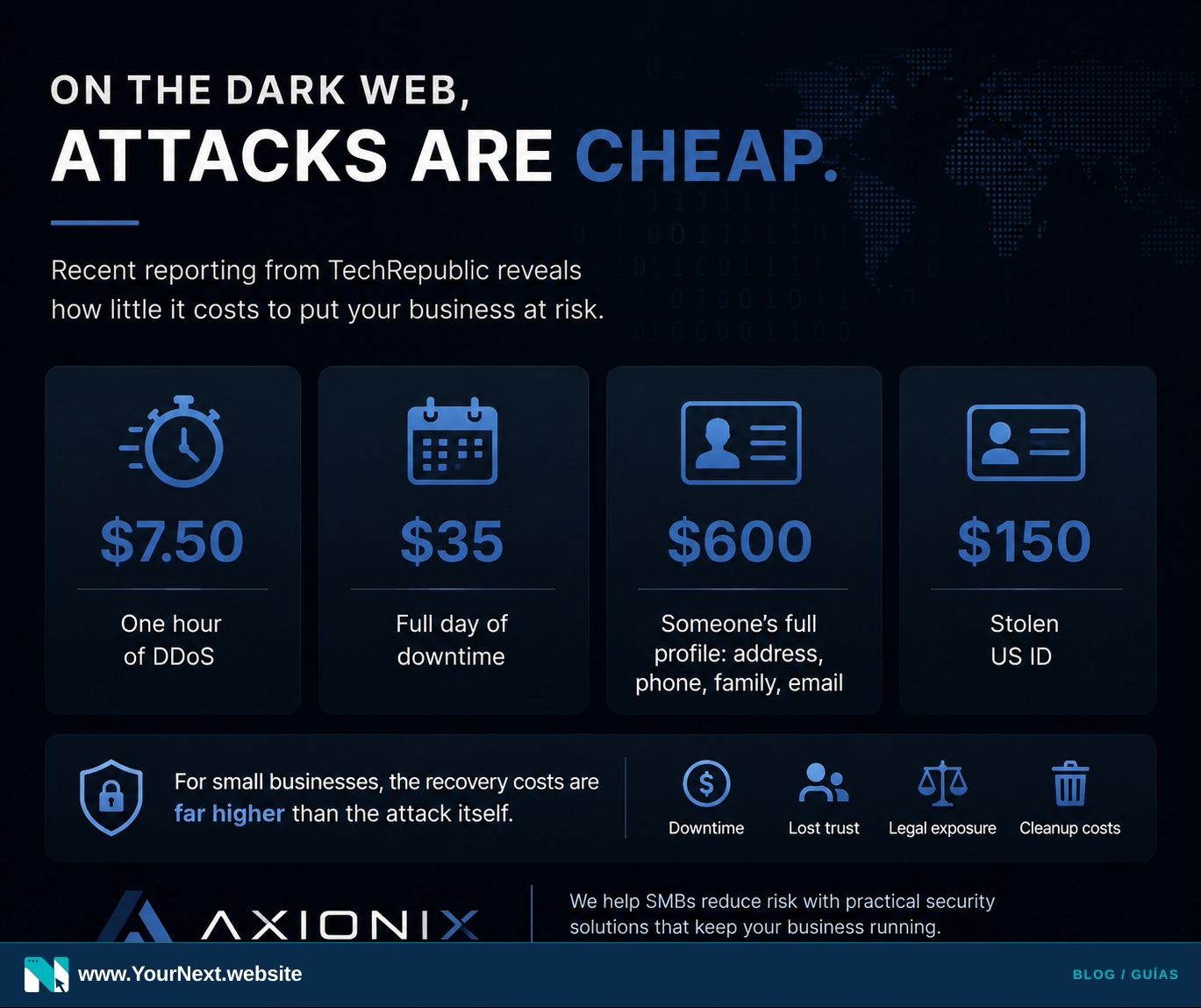
Recent reporting from TechRepublic highlighted just how low the barrier to entry has become. The pricing openly advertised for digital disruption tools includes:
- $7.50 for one hour of continuous website disruption (DDoS activity)
- $35.00 to disrupt a targeted system for a full day
- $150.00 for stolen personal identification documents
- $600.00 for complete, exposed personal profiles and sensitive business information
The critical takeaway here is not the exact dollar amounts. It is the realization that launching a minor digital attack costs less than a casual business lunch. Because the entry cost is so low, automated bots constantly scan the internet looking for easy entry points, regardless of the company's size.
Where the Vulnerabilities Actually Lie
Most small business disruptions do not stem from sophisticated, Hollywood-style hacking groups bypassing complex defense systems. Instead, they occur because of simple, everyday operational gaps that are easy to overlook when running a busy team.
The most common triggers for a business network disruption include reused employee passwords across multiple websites, exposed credentials from old third-party data leaks, standard phishing emails that trick staff into typing in their login details, outdated software systems that lack recent stability patches, and leaked company data left exposed on public forums.
While the tools to cause these problems are incredibly cheap to buy, the cost for an SMB to recover from them is disproportionately high. The real damage is rarely the attack itself; it is the resulting operational downtime, the loss of customer trust, the sudden halt in daily revenue, potential legal or regulatory exposure, and the unexpected technical cleanup fees required to get things running normally again.
Your Weekly System Security Checklist
You do not need an enterprise-grade budget to secure your business. Taking these four practical actions this week will eliminate the most common technical weak points:
- Audit Employee Passwords: Require the use of a team password manager to ensure no two accounts share the same password.
- Turn on MFA: Enable Multi-Factor Authentication on your company email, accounting software, and primary domain registrar immediately.
- Run System Updates: Check your company's website platforms, content management systems, and local office hardware to ensure all security updates are applied.
- Review Access Lists: Check your shared cloud drives and remove access for any former employees, contractors, or outdated third-party vendors.
Practical Safety Built to Work
Securing your operations does not mean adding heavy, confusing processes that slow your team down. It is about establishing reliable, everyday technical habits that close the easiest entry points for automated tools.
Axionix Systems can help. We focus on practical security improvements, website security risk reviews, and foundational protections that keep your business stable without unnecessary complexity. If you are curious about what information or credentials about your business might already be exposed online, contact us at axionixsystems.com.